The Secret Ingredient That's Not in Any Recipe: How Our Brain "Hacks" the Taste of Food
ElenaVro•07/29/2026•3 min de lecture•Mis à jour aujourd'hui
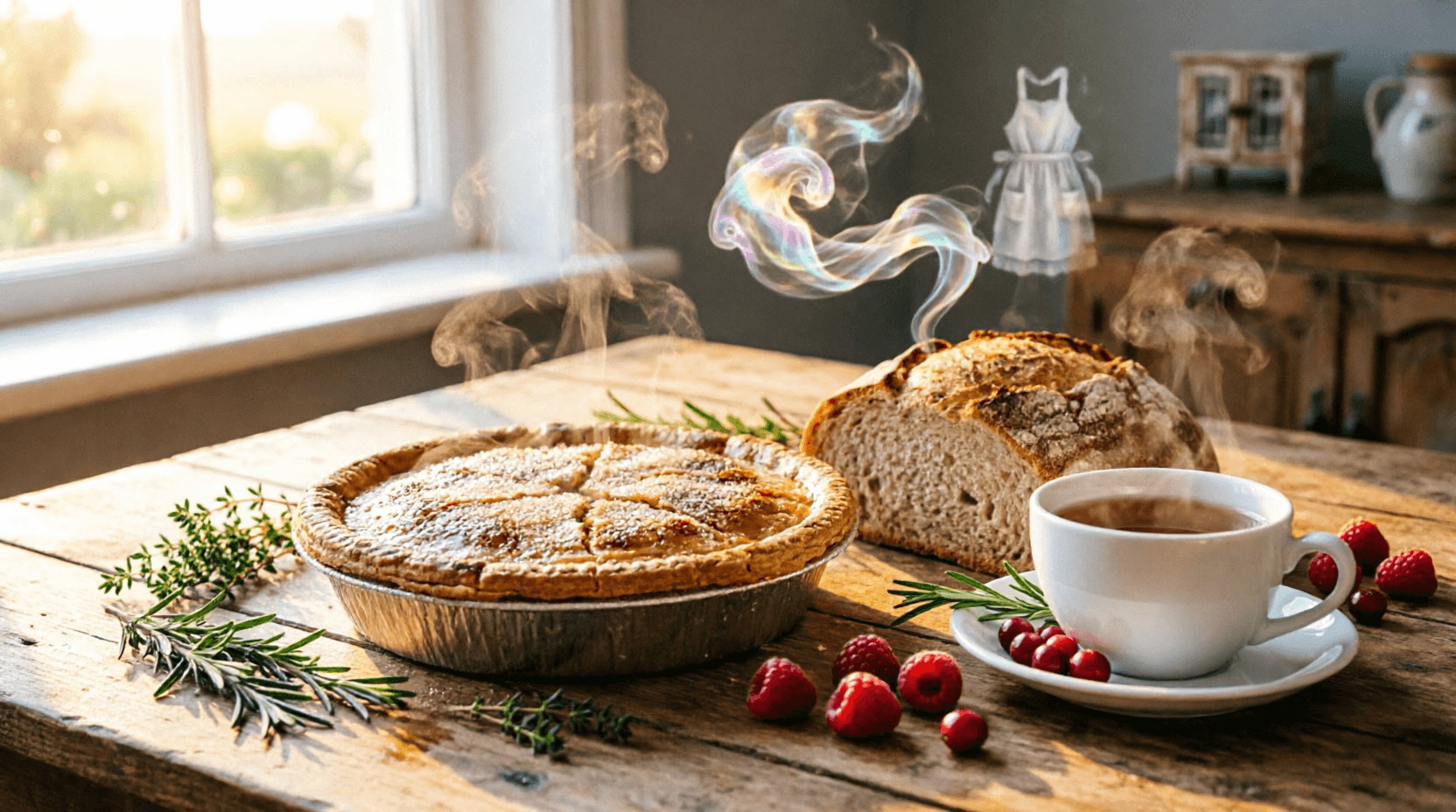
Have you ever taken a bite of a familiar cookie or smelled spices and suddenly found yourself back at age seven in your grandmother's kitchen? Decades flew by, but that taste instantly brought you back to that very moment, evoking a wave of warmth and nostalgia. This isn't magic or sentimentality. It's a complex mechanism that scientists call the Proust effect. And it proves a surprising thing: food isn't just a set of proteins, fats, and carbohydrates. It's a real gastronomic time machine. Let's figure out why "delicious" isn't a characteristic of a dish, but an emotion, and how our brain tricks our taste buds.
The Anatomy of Taste: Why the Nose is More Important Than the Tongue
We're used to thinking that we taste with our tongue. But in reality, the tongue is only responsible for basic settings: sweet, salty, sour, bitter, and umami. Everything else—the subtle notes of vanilla, the aroma of roasted meat, the complexity of a wine bouquet—is smell.
When you chew, aromatic molecules rise through the back of the nasopharynx to the olfactory receptors. And this is where the most interesting part begins.
Unlike vision or hearing, the olfactory nerve doesn't make a "detour" through the thalamus (the brain's main distribution center). It goes on a direct line straight to the limbic system—to the amygdala (responsible for emotions) and the hippocampus (responsible for memory).
That's why smell and taste can instantly, without any logical effort, pull a vivid memory from the depths of the subconscious. We consciously remember visual images, but tastes and smells are "embedded" in our emotional memory forever.
The Myth of the "Secret Ingredient"
Why does borscht cooked by mom always seem tastier than the exact same borscht cooked from the same recipe in a restaurant?
Many look for the answer in a "secret ingredient"—a pinch of love, a special broth, or a secret spice. But neurobiologists and psychologists give a more prosaic, but no less beautiful answer: context.
Our brain never evaluates taste in a vacuum. It takes everything into account:
Emotional state. If you eat while stressed, food will seem bland. If you're relaxed and happy, the taste will unfold more vividly.
Expectation. If you're told this is an expensive truffle sauce, the brain will pre-tune the receptors for pleasure, and you'll actually feel a richer taste (even if it's a regular mushroom extract).
Atmosphere. Sound, light, the weight of utensils, and even the color of the plate change the perception of food.
Neurogastronomy: How to Hack Taste Without Spices
There's an entire science at the intersection of psychology and gastronomy—neurogastronomy. Its pioneer, Professor Charles Spence, proved that we can change the taste of a dish just by changing the environment:
Color matters. Strawberry mousse served on a white plate seems 10% sweeter than the same mousse on a black plate. And drinks in blue glasses seem more refreshing.
The weight of utensils. Yogurt eaten with a heavy, weighty spoon is perceived by the brain as thicker, richer, and more "premium."
Soundtrack. High, ringing sounds (like the clinking of glasses or certain classical music) enhance the perception of sweetness. Low, bass sounds emphasize bitterness and make the taste more "astringent." That's why expensive restaurants often play specific ambient music.
Food as an Emotional Anchor
Understanding how our brain works changes the very attitude toward cooking. Cooking stops being just a routine for providing yourself with calories.
When you cook for loved ones, you're actually engaged in architecting their future memories. You're creating emotional anchors. In ten or twenty years, your children or partner will be able to close their eyes, take a bite of your signature pie or roast, and instantly return to that evening, feeling the same warmth and coziness as now.
In a world where food can be ordered in one click and delivered faceless in a cardboard box, home cooking becomes an act of resistance. It's a way to slow down, engage all your senses, and create something that can't be bought in any store.
Summary
Next time you sit down at the table, try not just eating, but observing. Pay attention to how the crust crunches, how the aroma fills the room, how your mood changes from the first sip.
Because the best recipe in the world isn't the one with perfectly measured grams. It's the one that makes your brain say: "I'm so glad I'm here."
Questions fréquemment posées
When was this published?
Publication and update dates are shown at the top of the article.
Is this information accurate?
We strive for accuracy and update content regularly.
Can I leave comments?
Reader engagement options may be available on this page.
How can I stay updated?
Subscribe to our newsletter for the latest articles.
Where can I find more articles?
Discover more content on fastmdm.com.
Vous avez d'autres questions ? Visitez fastmdm.com pour plus d'informations.
Contenu connexe
Voyages
Plus →



Santé
Plus →Tests
Plus →