The Anatomy of the Modern Swipe: How Algorithms Rewrote the Rules of Love
ElenaVro•07/28/2026•4 Min. Lesedauer•Heute aktualisiert
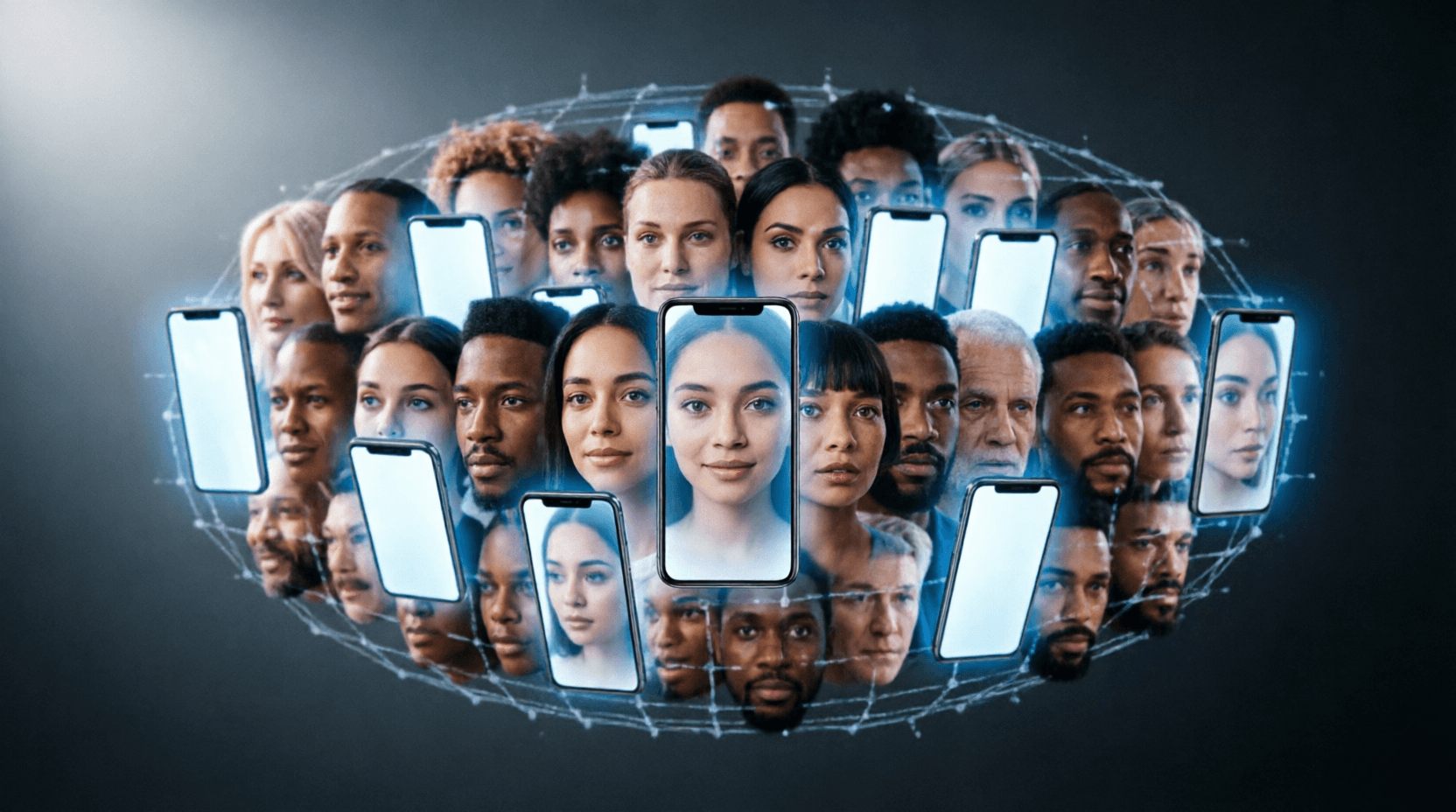
Just twenty years ago, a movie meet-cute looked like this: a chance glance across a crowded room, a collision in a bookstore, or a long conversation on a train. Today, the script has changed. We no longer rely on the whims of chance—we trust algorithms. Online dating has long ceased to be a punchline or a source of embarrassment. It is a massive social shift, a new infrastructure for human connection. But how exactly does the digital environment transform the way we seek, choose, and attach to one another?
The Showcase of Romance: The Profile as a Personal Brand
The first thing a user encounters on any dating app is the need to become their own marketer. A profile online isn’t just a form; it’s a carefully curated digital avatar.
We choose photos that broadcast a specific vibe: "I love to travel," "I have a sense of humor," "I’m a serious professional." We select music, quotes, and answers to quirky prompts to filter out the "wrong" audience and attract the "right" one. In this paradigm, the search for romance is surprisingly similar to job hunting or personal branding. And this changes the very optics of how we perceive another person: we begin to evaluate potential partners through the lens of their "packaging."
The Paradox of Choice and the Illusion of Infinity
Psychologist Barry Schwartz once described the "paradox of choice": when a person has too many options, it becomes harder to make a decision, and satisfaction with the chosen option drops.
Dating apps realize this paradox in absolute form. Finding yourself in a database of thousands of potential partners, the brain is confronted with the illusion of infinity. An unspoken belief arises: "What if the next swipe brings someone even better?" This mechanic breeds what sociologists call relationship FOMO (Fear Of Missing Out). We become less inclined to invest time in developing a difficult but promising connection because the "ideal" is always just one finger-swipe away.
The Gamification of Romance and the Dopamine Loop
We cannot ignore how apps are designed from a UX/UI perspective. The swipe mechanic is borrowed from casual games and even resembles the interface of a slot machine.
When you get a mutual match, your brain receives a micro-dose of dopamine—the hormone of anticipation and reward. It doesn’t matter how well the person actually fits your life; the "win" itself, the validation of your attractiveness, is what counts. Romance becomes gamified: we collect matches like achievements, and the process of communication sometimes turns into endless texting with no goal of meeting in real life—a sort of digital ping-pong just to keep the momentum going.
A New Lexicon of Vulnerability
The digital environment has spawned entirely new forms of communication and, consequently, new terms to describe human behavior:
Ghosting — disappearing from a chat without explanation. In real life, this is hard to pull off, but a smartphone screen creates an illusion of safety and lowers empathy.
Breadcrumbing — "leaving crumbs." A situation where someone gives faint signs of attention to keep you in their orbit, but has no intention of developing the relationship.
Orbiting — hovering at the texting stage for months without moving to a real-life meeting.
These phenomena are not a sign that people have become "meaner" or "more indifferent." This is the psyche’s adaptation to conditions where severing a tie is as easy as closing a browser tab.
The End of Geography
On the other hand, the internet has engineered a true social revolution, breaking love’s tie to geography. Previously, our dating pool was limited to the neighborhood, the university, or the workplace. Today, algorithms can connect someone from a residential suburb of a megacity with someone on the other side of town, or even with a person from another country.
This expands our social bubbles. We get the chance to cross paths with those we would never have bumped into in an offline environment due to differences in schedules, commutes, or social circles.
A Mirror, Not a Machine
Online dating is neither good nor bad. It is a tool that acts like a magnifying glass. It doesn’t create new feelings, but it exposes old human patterns.
Technology has changed how we meet. It has removed barriers to entry, accelerated the initial screening process, and added an element of gamification. But why we seek each other remains unchanged. Behind every profile, behind every edited photo and every "hey, how are you" message, lies a basic human need—to be seen, understood, and not alone in this world.
The smartphone screen has become a new door. But to truly get to know someone, you still have to open that door and take a step forward.
Häufig gestellte Fragen
Can I leave comments?
Reader engagement options may be available on this page.
When was this published?
Publication and update dates are shown at the top of the article.
How can I stay updated?
Subscribe to our newsletter for the latest articles.
Where can I find more articles?
Discover more content on fastmdm.com.
Is this information accurate?
We strive for accuracy and update content regularly.
Can I share this article?
Yes, use the share buttons to share on social media.
Haben Sie weitere Fragen? Besuchen Sie fastmdm.com für weitere Informationen.
Verwandte Inhalte
Kurse
Mehr →
Künstliche Intelligenz & Maschinelles Lernen mit Python-Grundlagen
Treten Sie ein in die Welt der Künstlichen Intelligenz – keine Vorkenntnisse erforderlich.

Der Beruf des 3D-Generalisten
3D-Generalist

Das ultimative Microsoft Office; Excel, Word, PowerPoint & Access
Grundlagen bis fortgeschrittene Microsoft Office-Kenntnisse in diesem 9-Kurse-Bundle für Office 365 oder Office 2019
Gesundheit
Mehr →Dienstleistungen
Mehr →